Purim Party
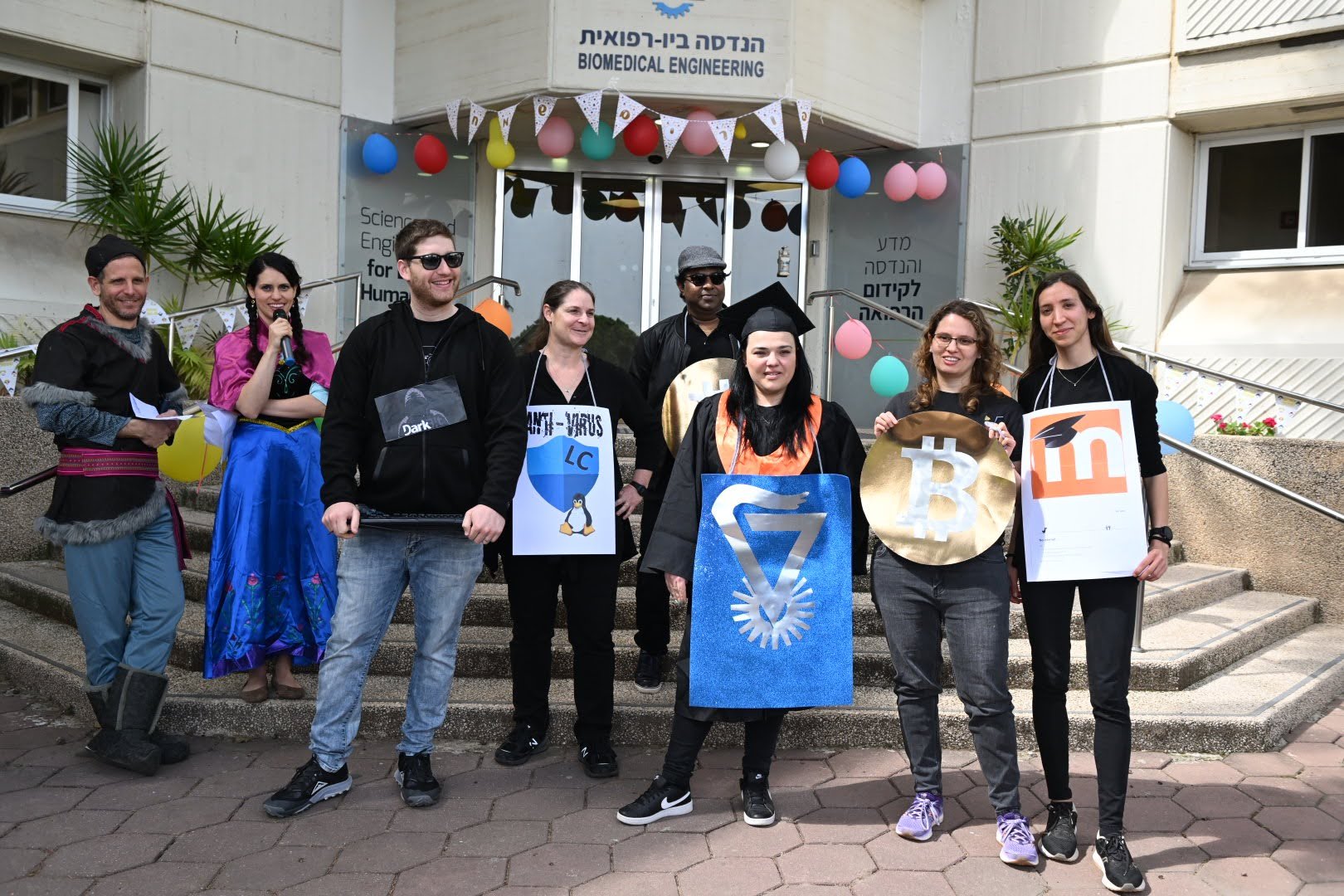
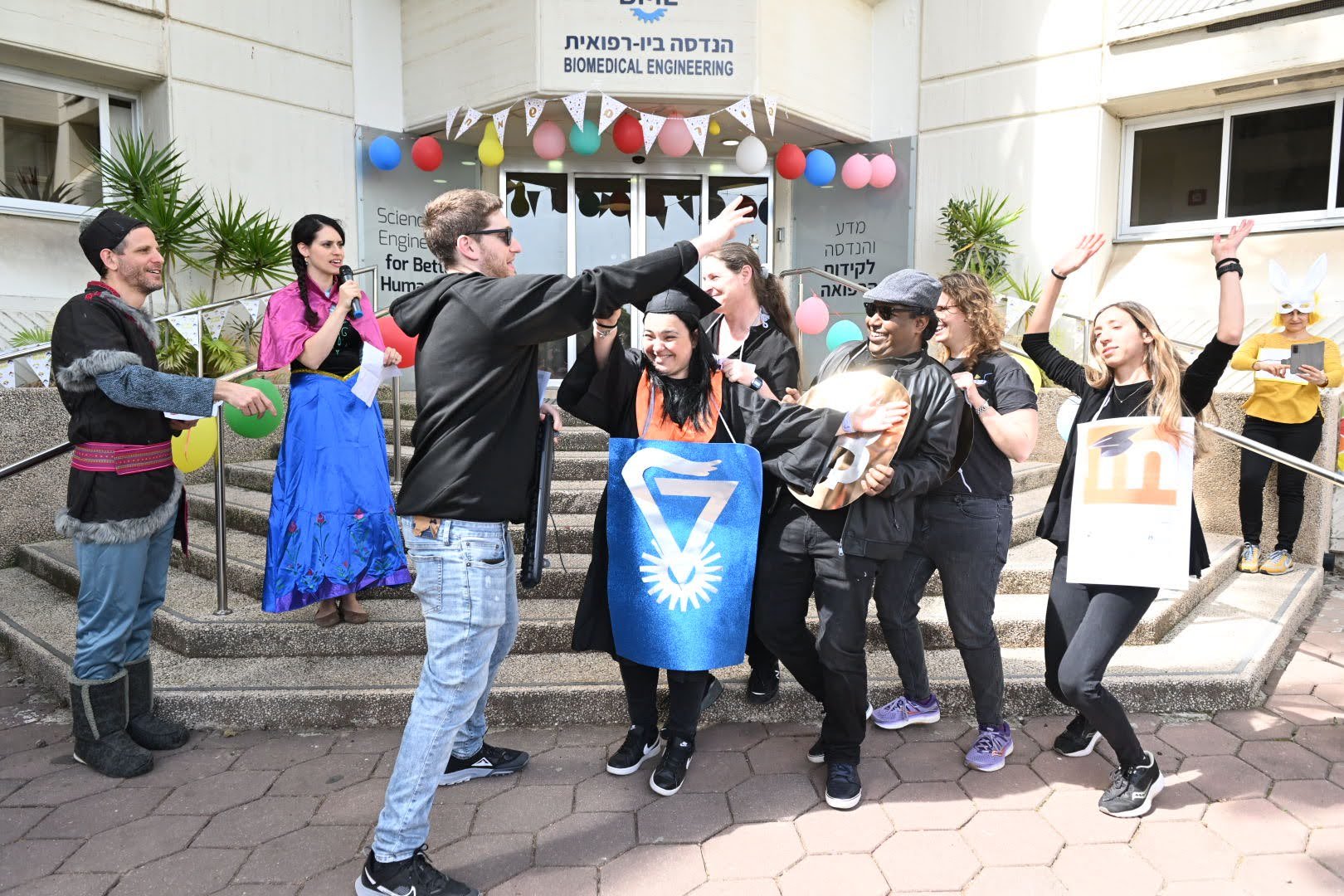
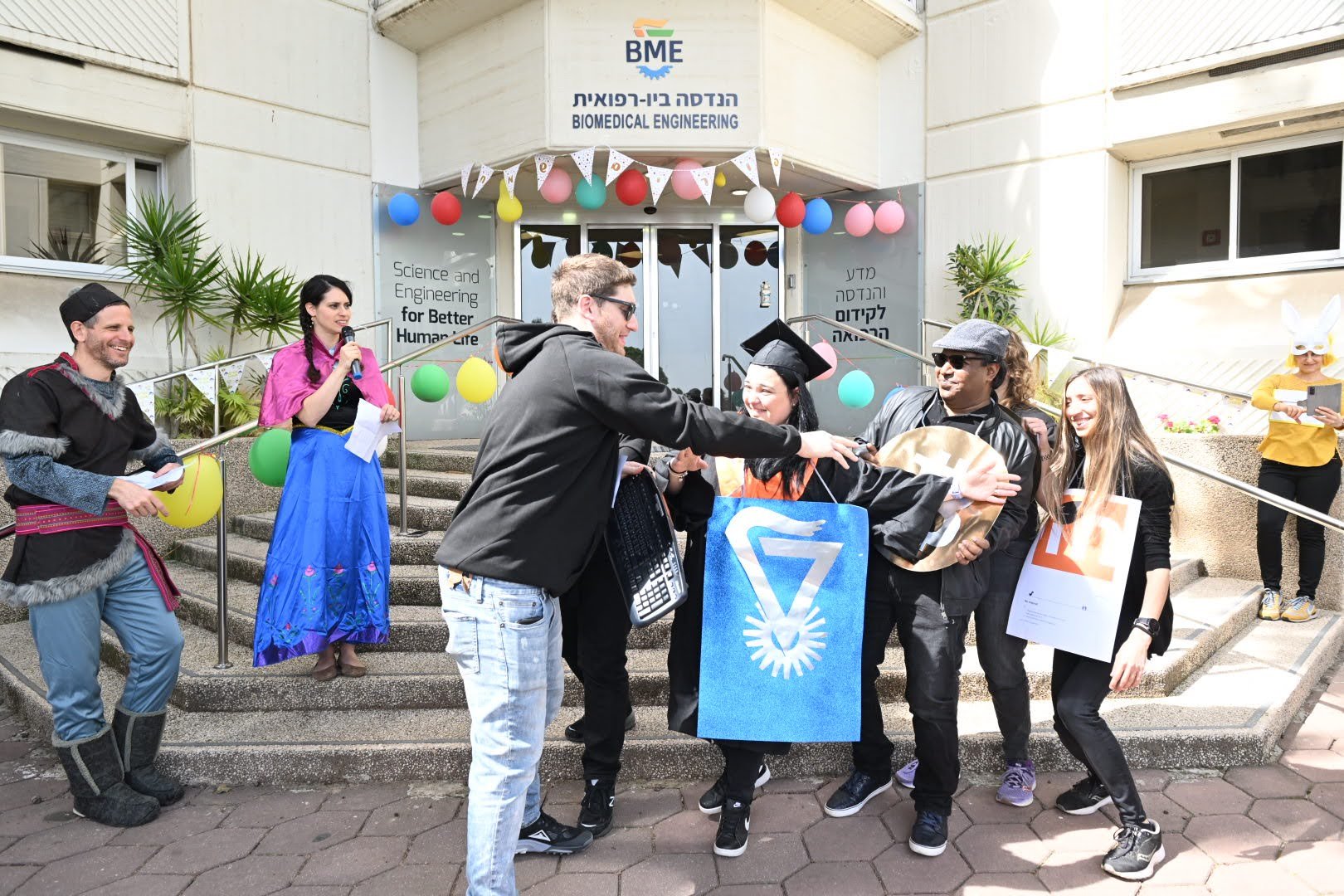
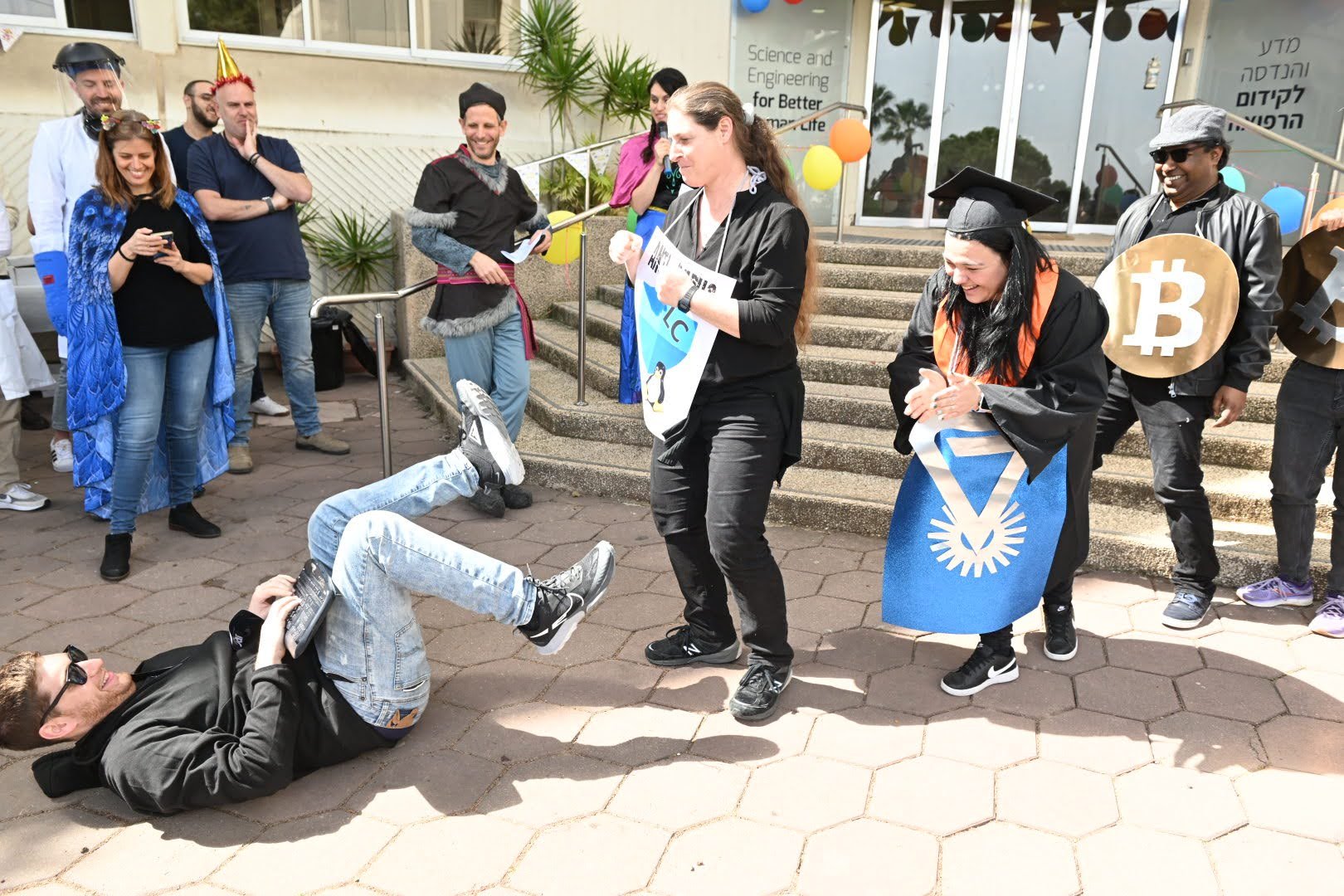
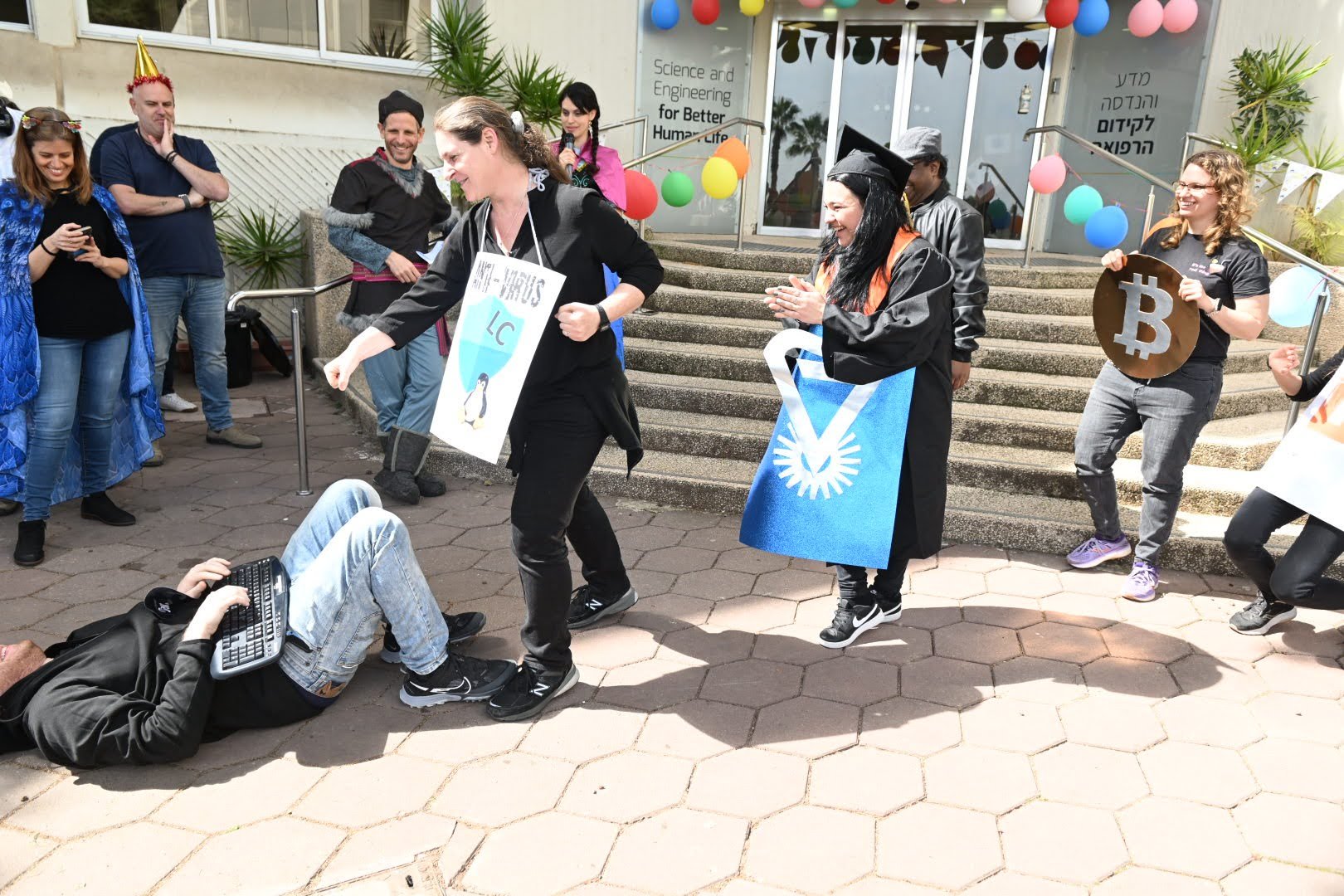
Meller Lab participated in a Purim party of the BME (Bio-Medical Engineering) Faculty. Mellers presented the Technion’s cyber attack while being dressed as Darkbit hackers, Technion, anti-vairus and moodle.
New Seven Wonders of Future Technologies
Nature published seven technologies to watch in 2023. Our lab was mentioned as one of the leading research teams working on single molecule protein sequencing. Prof. Meller’s motivation was cited: “You might be able to look at maybe tens of thousands or even millions of nanopores simultaneously”.
To read more about the seven technologies to watch in 2023, visit the site:
https://www.nature.com/articles/d41586-023-00178-y
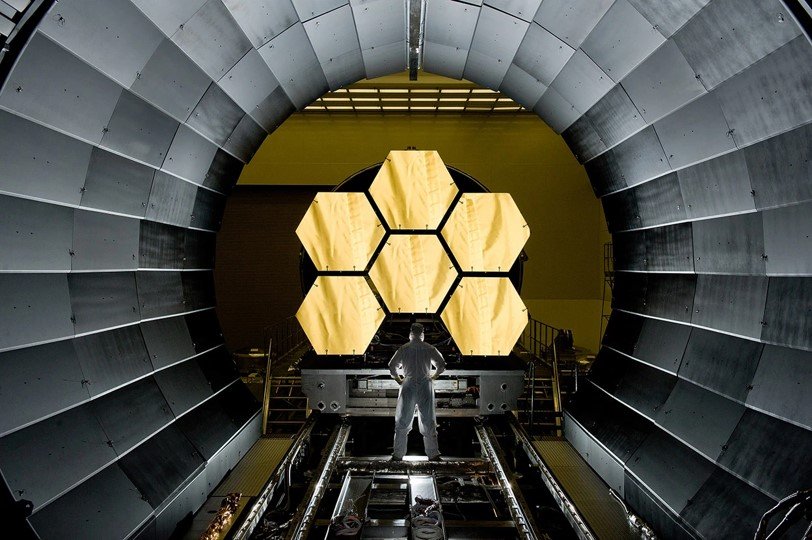
The James Webb Space Telescope’s 6.5-metre primary mirror (6 of 18 segments shown) can detect objects billions of light years away. Credit: NASA/MSFC/David Higginbotham
Hanukkah celebration at Meller Lab
Meller lab gathered together to celebrate and light Menorah candles on the last day of Hanukka 25th of December 2022. Delicious donuts were served of course 😋

Meller lab members present at biophysics retreat
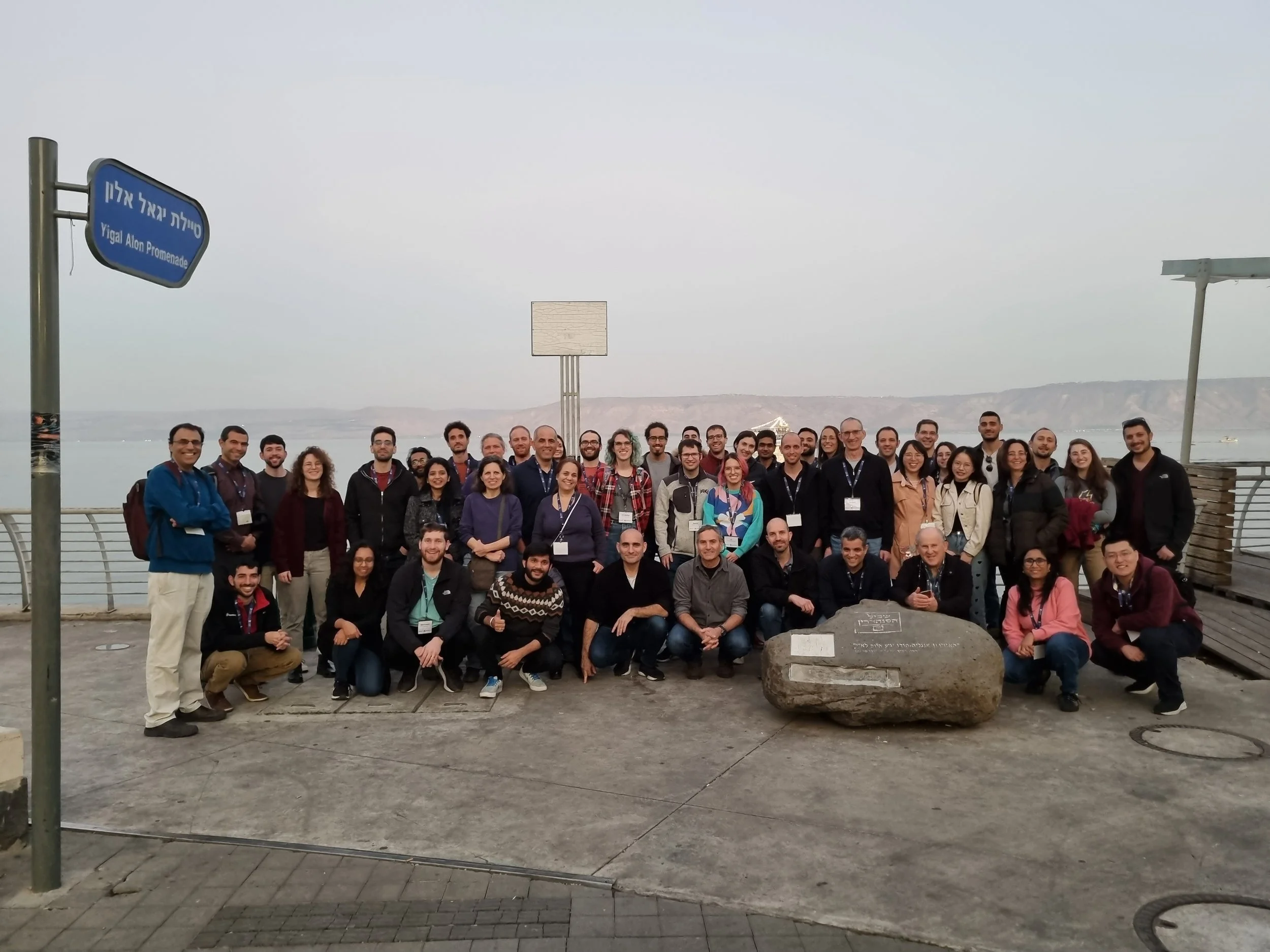
Members of Meller Lab presented research posters and talks at the Biophysics Retreat, an annual event that brings various biophysics groups together and showcases the interesting research developments across the field. The event was held in Tiberias, Israel on December, 2022.
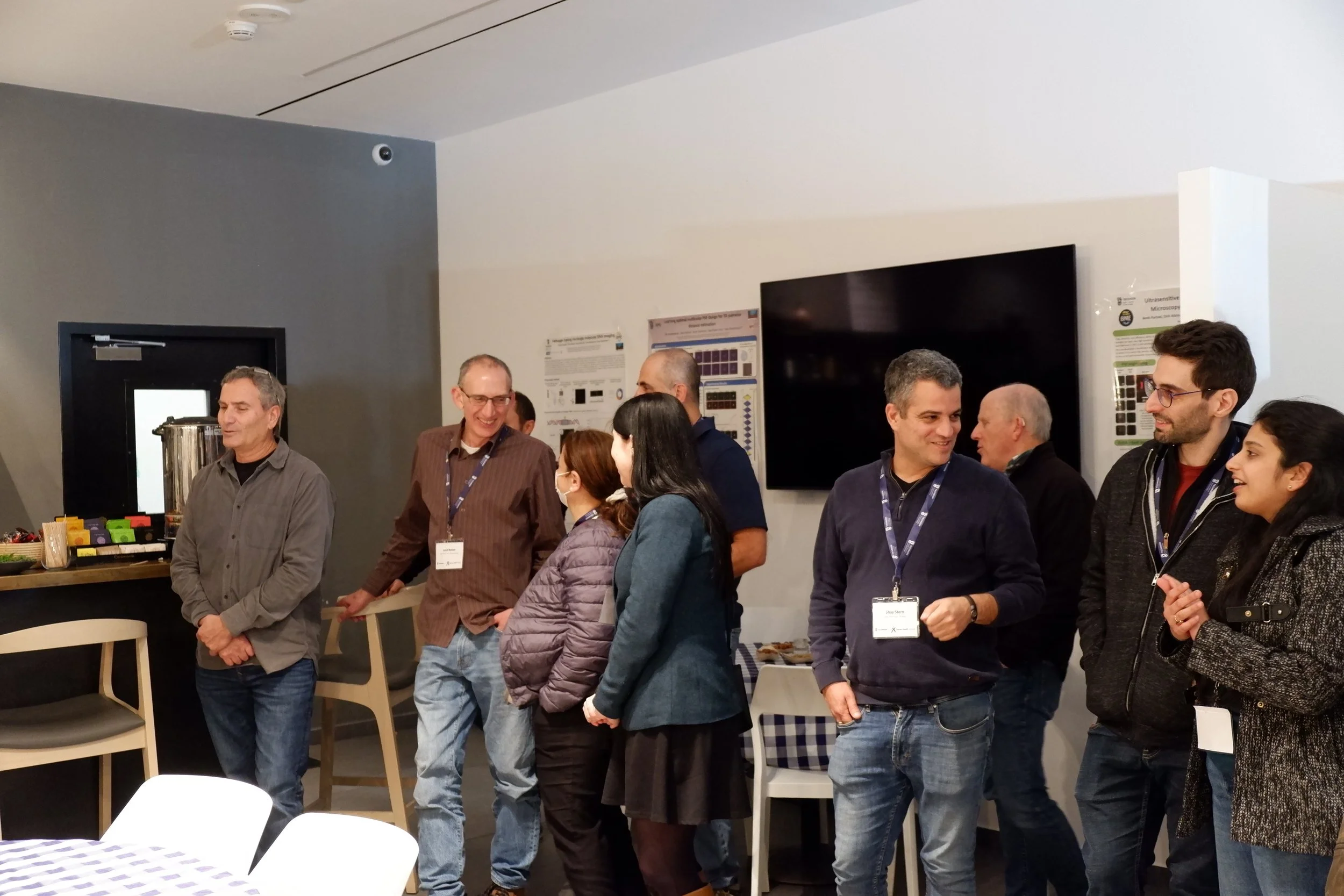
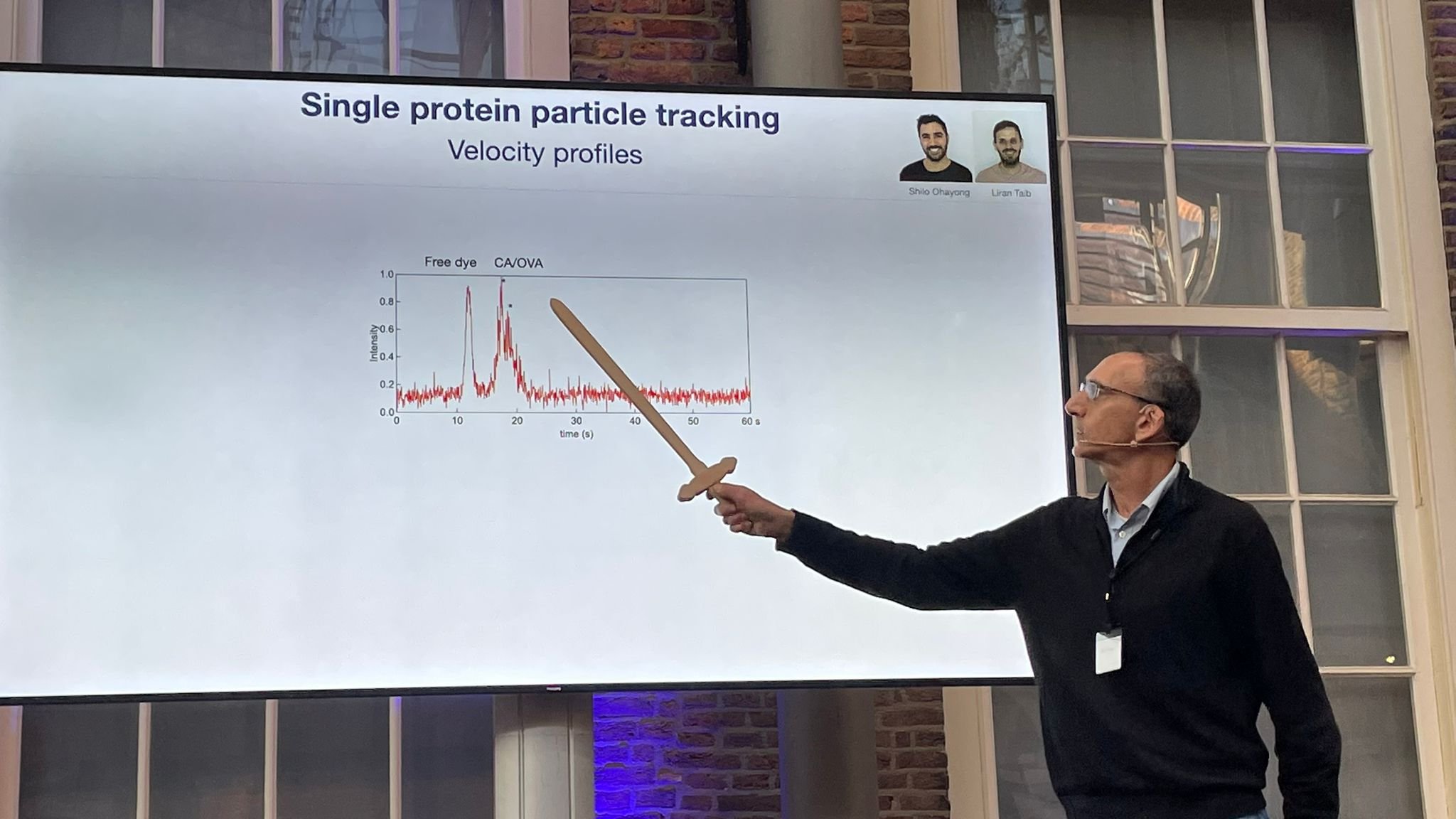
Our lab members represented us in SMPS3 conference in Delft, the Netherlands.
Dr. Yulia Marom, Dr. Navneet Verma Chandra, Neeraj, Liran, Shilo, Noam, and Prof. Meller presented our research in single molecule sequencing. The group presented five different posters, each one on a different topic.


Meller lab won the 2022 MOST Sweden-Israel award.
Prof. Meller is among the recipients of this year’s awards - The MOST Sweden-Israel award with his colleagues at the Royal Institute of Technology, to develop novel plasmonic nanopore sensors for clinical bio molecular markers.